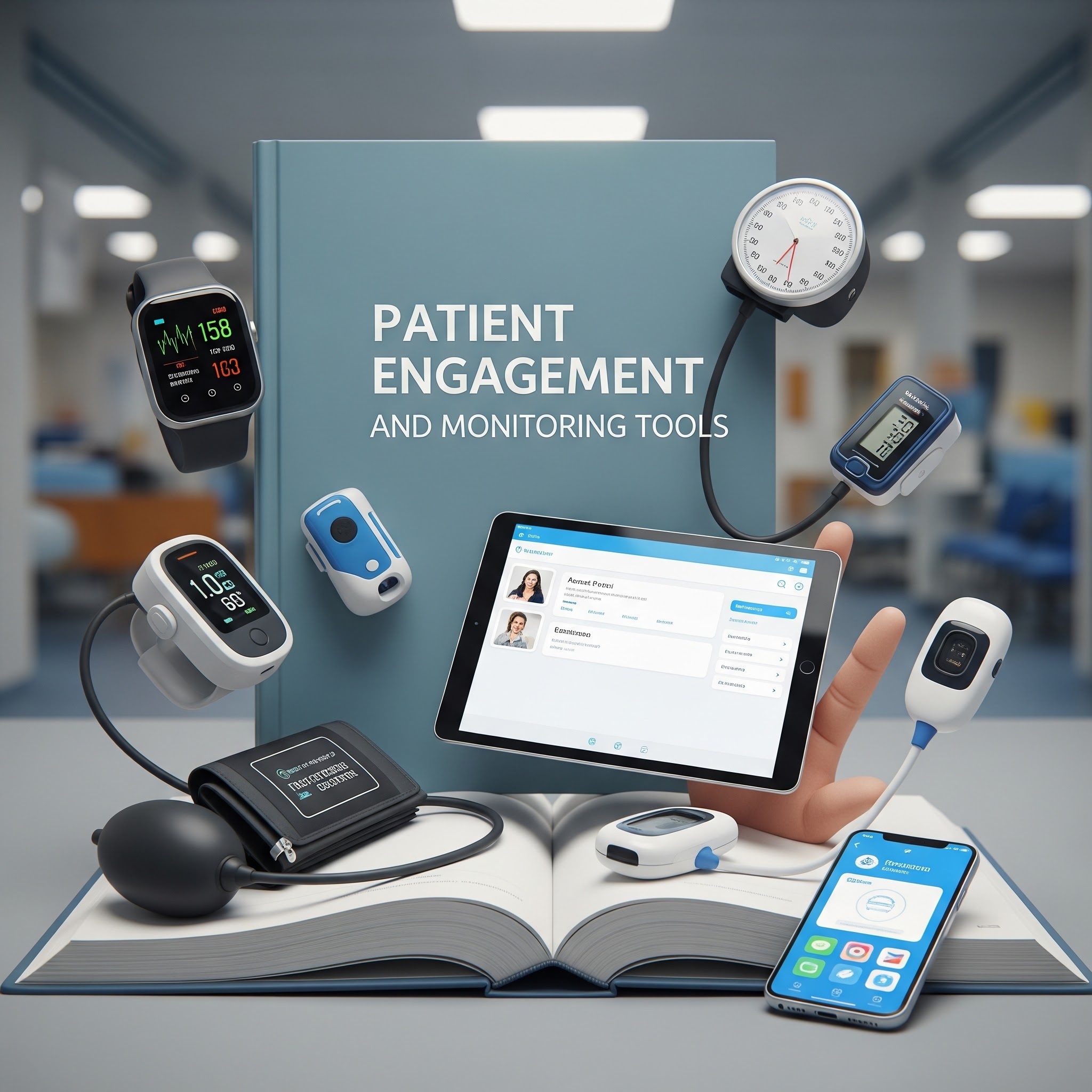
Healthcare Technology Integration: Patient Engagement and Monitoring Technologies
$35.00 Add to Cart
 Format: E-course
Duration: 201
Instructors: Coral MED
Learning Credits: 0.3 CEUs
Accrediting Body: IACET
*This course was updated on Jun 30, 2026.
Description
This unit explores how patient engagement technologies and digital monitoring tools support active participation, continuous monitoring, and better health outcomes in Remote Patient Monitoring (RPM) environments. Learners will examine the integration of mHealth applications, wearable sensors, IoT devices, and AI-driven platforms that empower patients to take ownership of their care. The unit emphasizes behavioral strategies, feedback systems, and communication tools that enhance adherence and motivation. It also examines barriers such as digital literacy, usability, and privacy concerns, providing best practices for inclusive and ethical design of patient engagement solutions.
Define patient engagement and describe its role in Remote Patient Monitoring. Identify key tools and technologies that support patient engagement and self-management. Explain how mHealth applications and wearables contribute to continuous monitoring and behavior modification. Analyze factors influencing patient adoption and sustained use of digital health tools. Evaluate strategies for improving patient adherence and satisfaction in RPM programs
Define the concept of patient engagement and its relevance to RPM. Identify key patient monitoring tools (wearables, mHealth apps, IoT sensors) used in digital health programs. Classifies and explains technology roles in patient self-care. Explain how mobile and wearable tools enhance continuous monitoring and behavioral change. Analyze social, cultural, and technical factors influencing patient adoption and sustained engagement. Evaluate strategies to enhance adherence, motivation, and satisfaction using engagement frameworks.
Foundational knowledge of healthcare systems, telehealth, or public health. Basic familiarity with digital tools or mobile applications. No coding or advanced technical expertise is required — just an interest in digital transformation in healthcare.
Healthcare professionals (nurses, clinicians, allied health staff) integrating patient engagement into clinical practice. Health informatics and IT specialists involved in developing or managing RPM and mHealth systems. Telehealth coordinators and digital health project managers seeking to enhance patient adherence and satisfaction. Researchers and educators in digital health and patient-centered care. Students in Public Health, Biomedical Informatics, or Nursing Informatics pursuing careers in health technology and innovation.
Disclosure: The instructor(s) have disclosed no proprietary interests in any products, instruments, devices, or materials discussed in this course. Coral MED maintains full independence, objectivity, and scientific integrity in its educational activities

 View Details