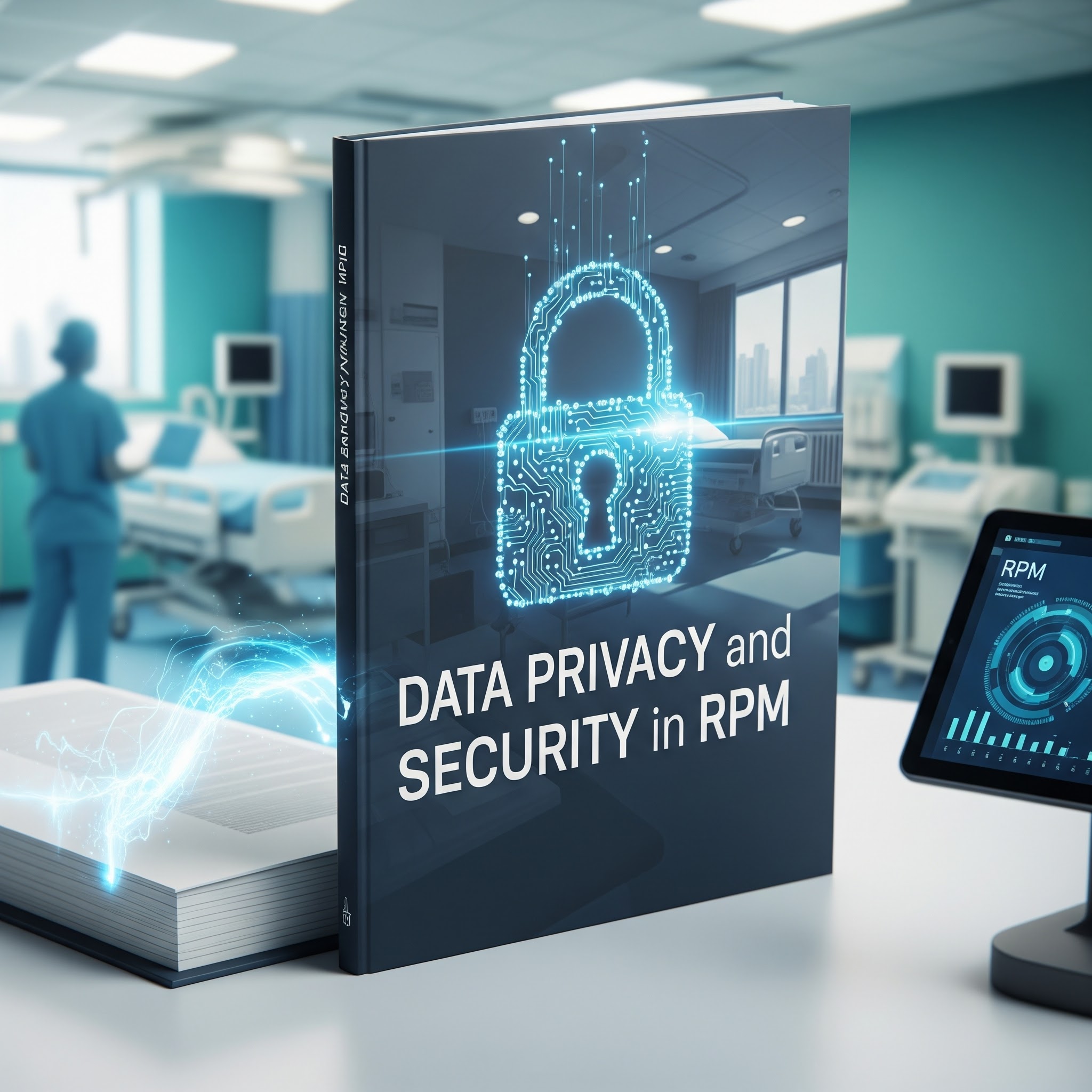
Healthcare Technology Integration: Data Privacy and Security in Remote Patient Monitoring
$35.00 Add to Cart
 Format: E-course
Duration: 2005
Instructors: Coral MED
Learning Credits: 0.3 CEUs
Accrediting Body: IACET
*This course was updated on Jun 30, 2026.
Description
This unit explores the ethical, legal, and technical principles of data privacy and security in Remote Patient Monitoring systems. As healthcare increasingly adopts connected devices and mobile technologies, ensuring the confidentiality, integrity, and availability of patient data becomes paramount. Learners will examine secure data exchange protocols like FHIR (Fast Healthcare Interoperability Resources), explore Role-Based Access Control (RBAC) for user authorization, and analyze real-world case studies highlighting challenges and best practices in safeguarding patient information. The unit emphasizes compliance with key frameworks such as HIPAA, HITECH, and GDPR, helping learners develop the skills needed to design, evaluate, and maintain secure, privacy-centered RPM systems within healthcare organizations.
Define secure messaging in the context of FHIR. Explain key data privacy principles applicable to RPM systems. Identify methods for managing user permissions under Secure Messaging and Role-Based Access Control (RBAC). Analyze case studies on secure data exchange in healthcare. Evaluate regulatory and ethical frameworks guiding data privacy and security in RPM.
Define the key concepts of secure messaging within FHIR and their application in RPM environments. Explain fundamental data privacy and protection principles (confidentiality, integrity, consent, data minimization). Apply access control and encryption techniques, including RBAC, to safeguard patient data. Analyze real-world case studies to identify vulnerabilities and assess solutions for secure healthcare data exchange. Evaluate compliance with privacy frameworks such as HIPAA, HITECH, and GDPR in healthcare data governance. Design a compliant data security and privacy plan for an RPM system integrating ethical and technical safeguards.
A basic understanding of healthcare delivery systems or clinical workflows. Familiarity with information systems or healthcare technology concepts. No advanced technical skills are required; however, basic computer literacy and an interest in digital health transformation are recommended.
Follow Coral Plus LMS policies: participation, integrity, respectful conduct, HIPAA/privacy adherence, timely completion of assessments. 1. Participants should register in advance to receive access details. 2. Access links and passwords, if applicable, should be provided securely to registered participants. 3. Participants are encouraged to join the webinar a few minutes early to resolve any technical issues 4. Participants are responsible for ensuring a stable internet connection, compatible devices (computer, tablet, or smartphone), and recommended browsers. 5. A microphone and webcam may be required for interactive sessions. Please test your audio and video settings in advance. 6. The webinar may be recorded for educational purposes. 7. Recorded sessions may be shared with registered participants after the webinar. 8. Please be mindful not to share personal or confidential information during the webinar. 9. A detailed agenda will be provided, and each session will adhere to the schedule to cover all planned topics. 10. Time will be allocated for Q&A sessions and discussions. 11. A helpdesk or contact information for technical support will be provided during the webinar. 12. Common technical issues will be addressed at the beginning of the session. 13. Relevant resources, such as presentation slides or additional reading materials, will be shared after the webinar.
Healthcare professionals (nurses, physicians, administrators) seeking to understand data privacy in digital health. Health informatics and IT specialists responsible for designing or managing secure health data systems. Data protection officers, privacy auditors, and compliance managers working in healthcare environments. Students and researchers in Health Informatics, Biomedical Engineering, or Public Health aiming to specialize in health data governance. Policy-makers and health administrators involved in regulatory oversight or digital health project implementation
Disclosure: The instructor(s) have disclosed no proprietary interests in any products, instruments, devices, or materials discussed in this course. Coral MED maintains full independence, objectivity, and scientific integrity in its educational activities

 View Details