Healthcare Compliance and Risk: Monitoring, Auditing, and Continuous Improvement
$35.00 Add to Cart
 Format: E-course
Duration: 198
Instructors: Coral MED
Learning Credits: 0.3 CEUs
Accrediting Body: IACET
*This course was updated on Jun 30, 2026.
Description
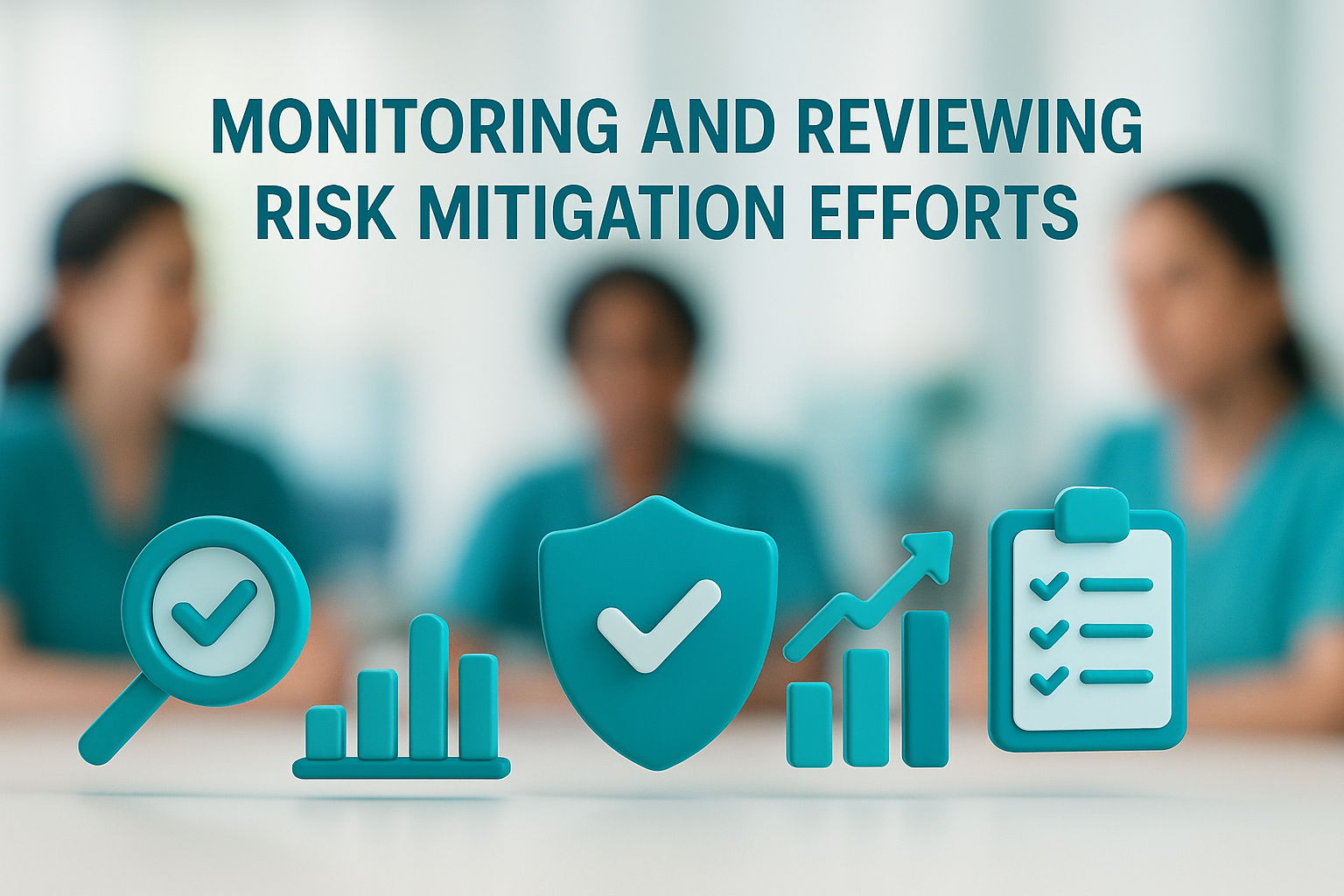
This unit emphasizes the importance of continuous monitoring and periodic review in sustaining effective risk management within healthcare organizations. Learners will explore tools and processes used to track mitigation outcomes, measure performance indicators, and identify areas requiring improvement. The course introduces methods for developing risk monitoring dashboards, compliance scorecards, and feedback loops, enabling data-driven decision-making. Emphasis is placed on creating transparent reporting systems that support both internal oversight and external regulatory compliance.
Explain the systematic process for monitoring and reviewing risk mitigation efforts, articulating the foundational principles of continuous improvement and the purpose of key performance indicators (KPIs). Formulate a detailed monitoring plan that includes a selection of appropriate KPIs to track the effectiveness of implemented risk mitigation strategies within a healthcare setting. Analyze the pivotal role of auditing, both internal and external, in monitoring compliance and ensuring the integrity and sustainability of risk mitigation strategies. Evaluate the effectiveness of implemented risk mitigation efforts by interpreting KPI data, analyzing audit findings, and assessing feedback from relevant stakeholders. Synthesize performance data, audit reports, and organizational feedback to recommend strategic improvements and innovative solutions for a healthcare organization's risk mitigation framework. Assess how organizational culture, including a "just culture" and a commitment to transparency, directly impacts the success of risk mitigation strategies and the monitoring process. Design a comprehensive system for the continuous monitoring and improvement of risk mitigation, integrating audit schedules, KPI dashboards, and a structured feedback loop.
By the end of this unit, learners will be able to: Establish systematic processes for monitoring and reviewing risk mitigation activities. Use performance metrics and dashboards to evaluate risk management effectiveness. Generate data-driven reports for compliance and executive review. Identify trends, gaps, and lessons learned to strengthen future mitigation efforts.\ Contribute to a culture of continuous quality improvement and accountability.
Completion of Unit 2.4, Risk Mitigation Strategies or equivalent understanding of risk control measures and healthcare compliance monitoring.
Follow Coral Plus LMS policies: participation, integrity, respectful conduct, HIPAA/privacy adherence, timely completion of assessments. 1. Participants should register in advance to receive access details. 2. Access links and passwords, if applicable, should be provided securely to registered participants. 3. Participants are encouraged to join the webinar a few minutes early to resolve any technical issues 4. Participants are responsible for ensuring a stable internet connection, compatible devices (computer, tablet, or smartphone), and recommended browsers. 5. A microphone and webcam may be required for interactive sessions. Please test your audio and video settings in advance. 6. The webinar may be recorded for educational purposes. 7. Recorded sessions may be shared with registered participants after the webinar. 8. Please be mindful not to share personal or confidential information during the webinar. 9. A detailed agenda will be provided, and each session will adhere to the schedule to cover all planned topics. 10. Time will be allocated for Q&A sessions and discussions. 11. A helpdesk or contact information for technical support will be provided during the webinar. 12. Common technical issues will be addressed at the beginning of the session. 13. Relevant resources, such as presentation slides or additional reading materials, will be shared after the webinar.
Healthcare compliance officers and risk managers responsible for oversight and reporting. Quality improvement professionals tracking performance and safety indicators. Clinical administrators and department leads overseeing risk reduction outcomes. Auditors and analysts involved in compliance and regulatory performance evaluation. Healthcare students and professionals pursuing roles in safety, quality, or compliance improvement.
Disclosure: The instructor(s) have disclosed no proprietary interests in any products, instruments, devices, or materials discussed in this course. Coral MED maintains full independence, objectivity, and scientific integrity in its educational activities
 View Details