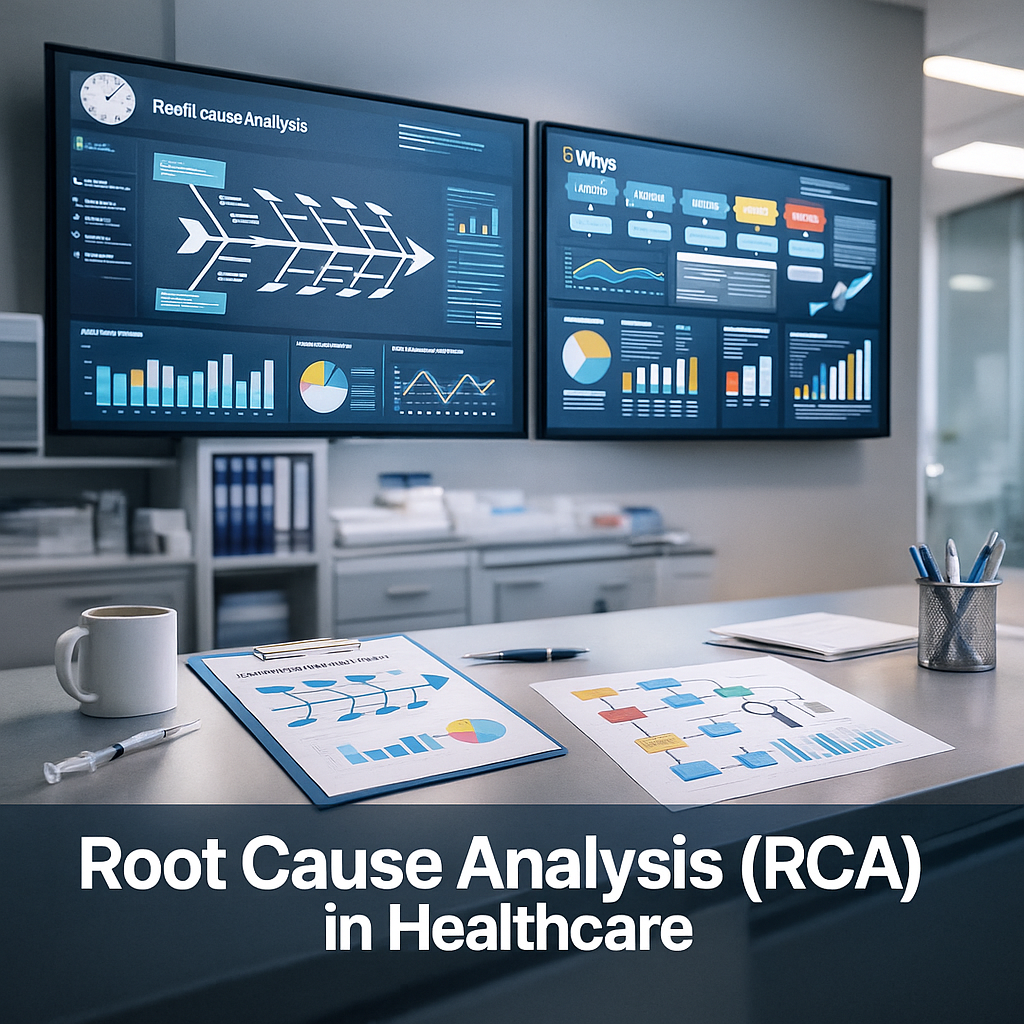
Healthcare Quality: Root Cause Analysis (RCA) Applications
$35.00 Add to Cart
 Format: E-course
Duration: 205
Instructors: Coral MED
Learning Credits: 0.3 CEUs
Accrediting Body: IACET
*This course was updated on Jun 30, 2026.
Description
This unit provides learners with a comprehensive understanding of Root Cause Analysis (RCA) as a critical tool for investigating adverse events and improving patient safety in healthcare settings. It focuses on identifying the underlying system failures that contribute to errors rather than attributing blame to individuals. Learners will explore the principles, steps, and methodologies of RCA, including data collection, cause identification, and development of corrective actions. Through case studies and practical exercises, students will learn how to apply RCA techniques such as the 5 Whys and Fishbone (Ishikawa) Diagrams to analyze incidents and design effective, sustainable solutions. The unit emphasizes collaboration, communication, and continuous improvement as essential elements in fostering a culture of safety within healthcare organizations.
Apply RCA to identify underlying causes of healthcare problems. Use Fishbone Diagrams to analyze complex healthcare issues. Apply the 5 Whys method to investigate patient safety incidents and system inefficiencies. Identify systemic issues in healthcare delivery through RCA. Implement findings from RCA to improve healthcare practices and patient safety. Apply RCA in real-world healthcare scenarios. Analyze past sentinel events and propose solutions based on RCA findings.
By the end of this unit, learners will be able to: Define Root Cause Analysis (RCA) and explain its significance in improving patient safety and healthcare quality. Differentiate between individual errors and systemic failures contributing to adverse events. Describe the key steps and methodologies involved in conducting an RCA, including data collection, cause identification, and corrective action planning. Apply analytical tools such as the 5 Whys and Fishbone (Ishikawa) Diagram to investigate sentinel events and uncover underlying causes. Collaborate effectively within a multidisciplinary RCA team to identify process gaps and propose sustainable safety solutions. Develop actionable, measurable corrective action plans that address identified root causes and prevent recurrence of incidents. Evaluate the effectiveness of RCA outcomes by integrating findings into organizational policies, procedures, and continuous improvement initiatives. Promote a culture of safety and non-blame learning through transparent communication and system-based problem solving. These outcomes ensure learners gain both theoretical understanding and hands-on skills to conduct effective RCA processes and lead quality improvement efforts in healthcare environments.
Before undertaking this unit, learners should have: Foundational knowledge of patient safety principles — including understanding the causes of medical errors and strategies to promote a safety culture (as covered in Unit 2.1). Basic understanding of risk management frameworks — such as Failure Mode and Effects Analysis (FMEA) and incident reporting systems (as introduced in Unit 2.2). Familiarity with healthcare operations and quality improvement processes, enabling comprehension of how system factors influence safety outcomes. Analytical and critical thinking skills necessary to interpret data, identify process failures, and evaluate contributing factors in clinical incidents. Effective communication and teamwork skills, as RCA relies on multidisciplinary collaboration for accurate investigation and implementation of corrective actions. These prerequisites ensure learners are prepared to engage deeply with RCA methodologies and apply them effectively to improve safety and quality within healthcare organizations.
This unit is beneficial for a wide range of professionals and learners involved in healthcare quality, patient safety, and risk management, including: Healthcare Practitioners – Doctors, nurses, pharmacists, and allied health professionals who participate in incident investigations or aim to improve clinical safety practices. Quality and Risk Management Officers – Professionals responsible for analyzing adverse events, developing corrective action plans, and ensuring compliance with safety standards. Healthcare Administrators and Managers – Leaders seeking to strengthen organizational systems by integrating RCA findings into policies and continuous improvement processes. Patient Safety Coordinators and Compliance Officers – Individuals tasked with promoting safety culture and ensuring adherence to standards set by JCAHO, WHO, and CMS. Public Health and Policy Professionals – Those engaged in designing system-wide strategies to prevent adverse events and enhance healthcare safety frameworks. Healthcare Students and Trainees – Learners preparing for clinical, management, or quality improvement roles who need foundational skills in safety event analysis and RCA methodology. Overall, this unit benefits anyone dedicated to improving healthcare quality by identifying system-level failures, preventing recurrence of adverse events, and fostering a culture of accountability and continuous learning.
Disclosure: The instructor(s) have disclosed no proprietary interests in any products, instruments, devices, or materials discussed in this course. Coral MED maintains full independence, objectivity, and scientific integrity in its educational activities

 View Details